
Clean water, stronger communities
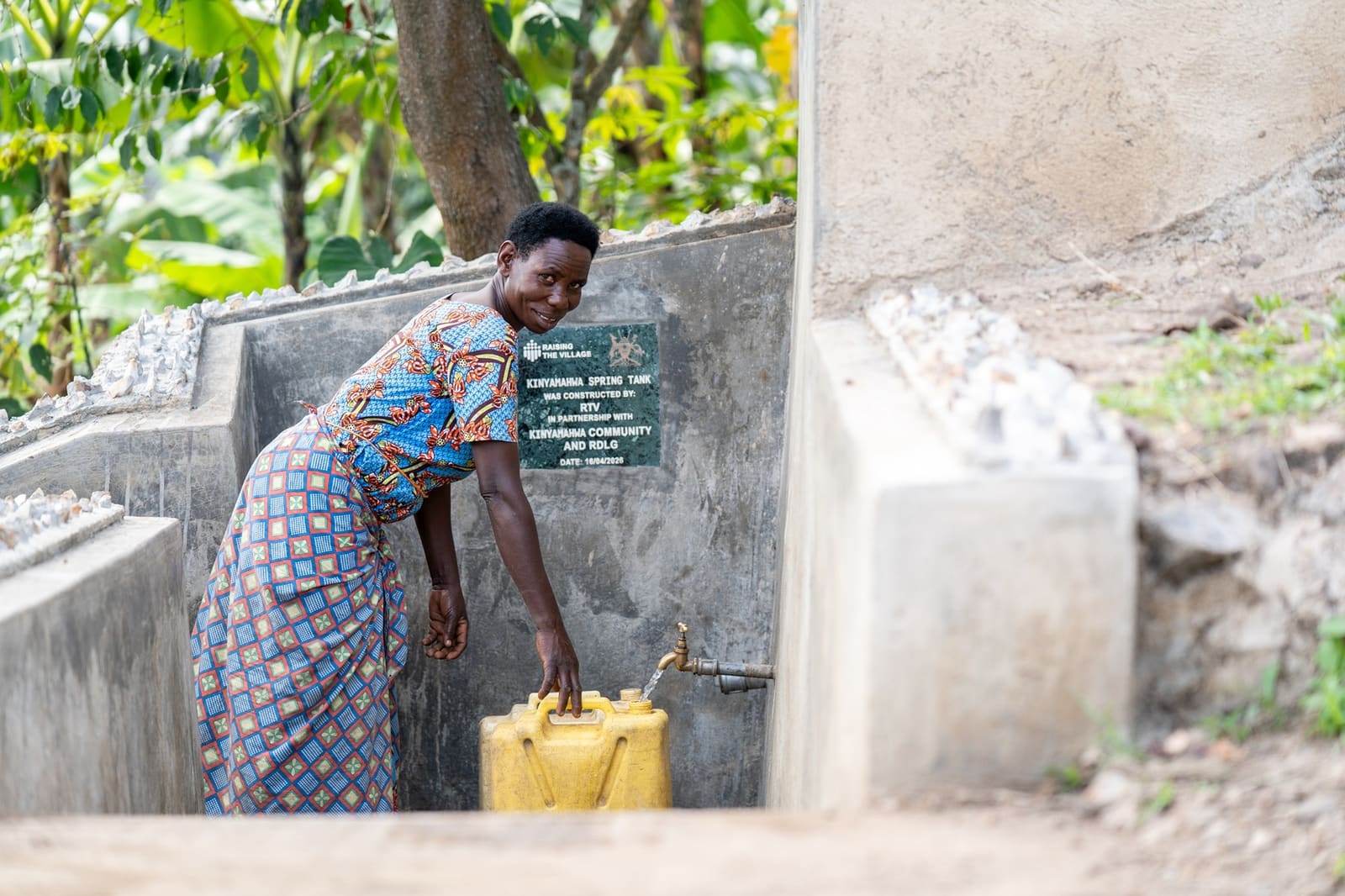
Today, collecting water takes only a few minutes for Edinah, and she no longer worries about whether it is safe to drink. Until a year ago, however, her family relied on a contaminated water source shared with grazing animals. The construction of a protected spring tank in partnership with RTV has improved access to clean water, reduced health risks, and freed up time for household and livelihood activities.
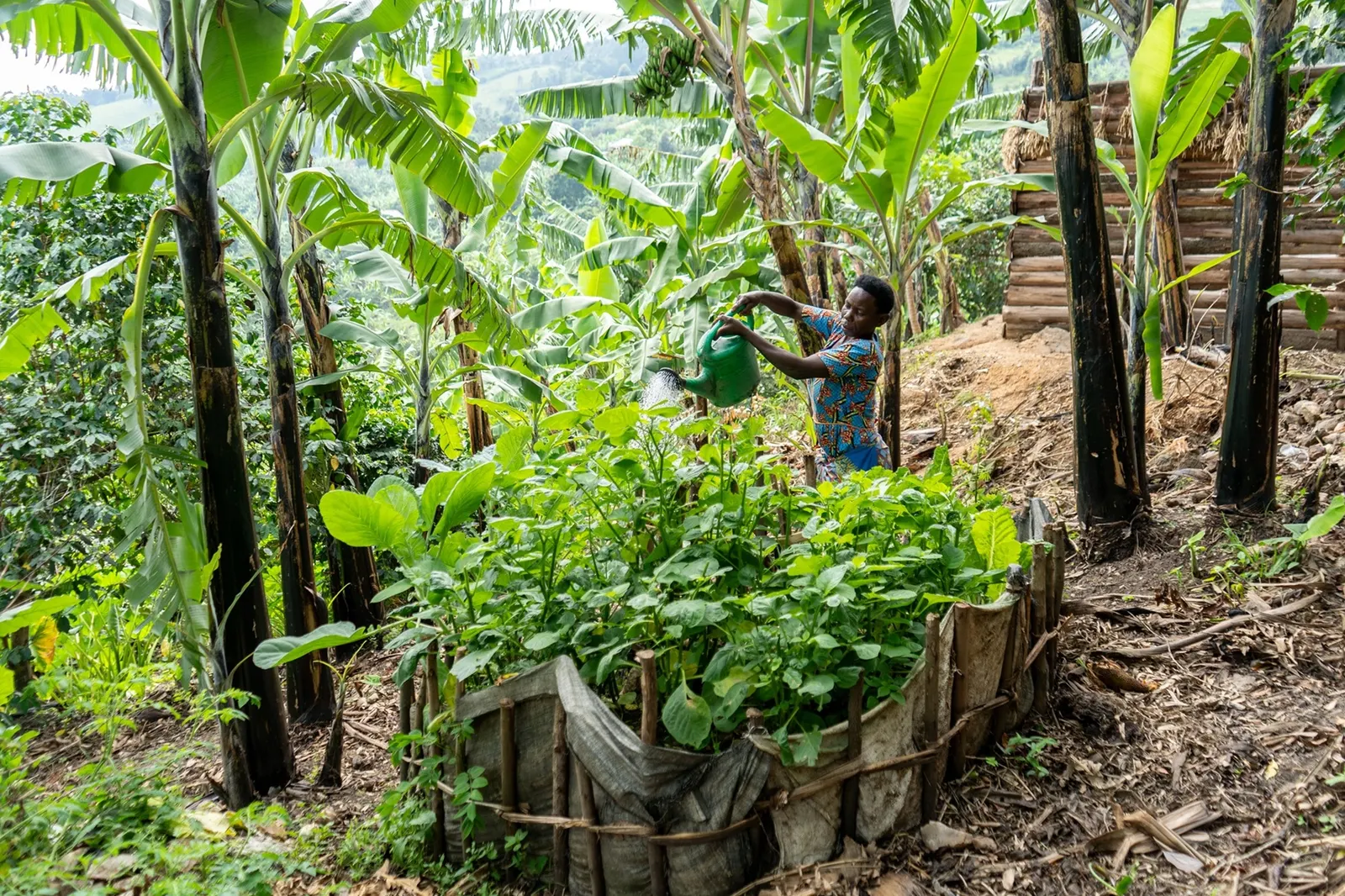
Edinah, 52, is a mother of five and depends on agriculture to support her family. She grows bananas, beans, millet, coffee, groundnuts, and vegetables, while also rearing goats and poultry. For years, access to clean water was one of the biggest challenges facing her household and community. Their only water source was frequently contaminated by animals, algae, and runoff during the rainy season. "I constantly worried about my family's health, particularly my children getting sick from drinking unsafe water. Our community frequently experienced typhoid, diarrhea, and digestive issues largely due to contaminated water," Edinah recalls.
When RTV partnered with Edinah's community in 2026, community members identified water access as a key barrier affecting health, sanitation, and daily productivity. A protected spring tank was constructed, bringing clean and safe water closer to households. The water source now serves approximately 20 households and has contributed to noticeable improvements in hygiene and sanitation across the community. The impact has not been limited to access alone. While the spring tank addressed the immediate challenge of unsafe water, households also had to adopt new hygiene and sanitation practices to maximize its benefits. Community leaders and residents worked together to maintain the source and encourage consistent use. According to Village Champion Keneth, community members quickly embraced the new water point and have seen significant improvements in household cleanliness and sanitation practices.
With the spring tank located near her home, Edinah spends far less time collecting water and can dedicate more time to caring for her family and tending to her gardens. "I feel so fortunate that the spring tank was built close to our homes, which allows me to easily access water whenever I need it. I now spend minimal time gathering water and focus more on taking care of my gardens, household tasks, and family," she says.
A few kilometers away, in a neighboring village, 65-year-old Margaret has experienced similar changes. Before a spring tank was built in her community, she regularly walked long distances to a valley in search of clean water because nearby sources were unsafe and contaminated. "Each journey through the valley and back was quite tiring, consuming both my time and energy. By the time I got home, I felt exhausted, with hardly any strength left for anything else," Margaret recalls. Today, clean water is available much closer to home. The reduced travel time has eased a daily burden and improved conditions within her household. "We now wash our clothes regularly, and my family members have enough water for bathing and cleaning themselves," she says.
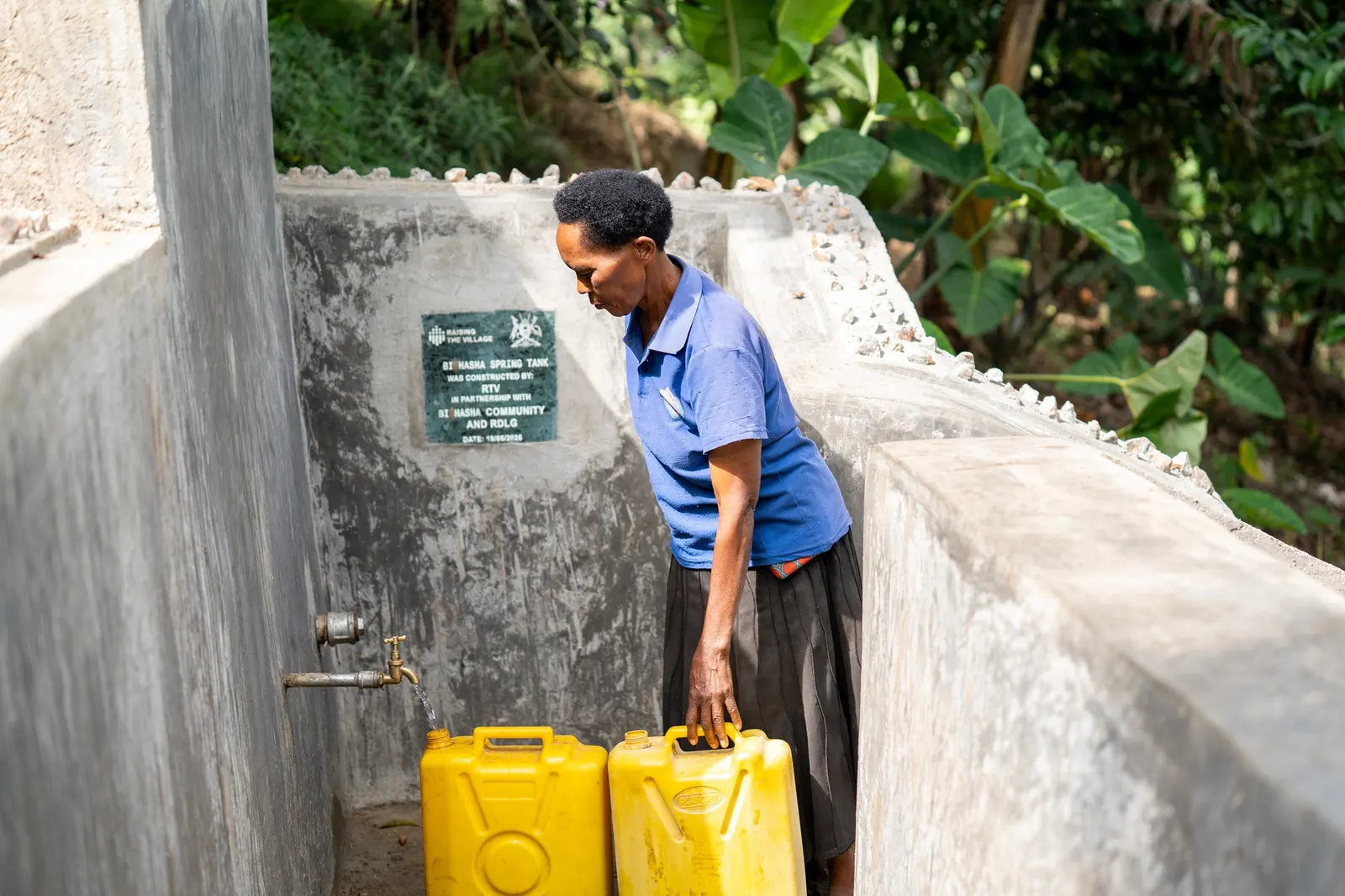
For both Edinah and Margaret, improved access to clean water has improved household wellbeing and addressed a long-standing source of uncertainty. As their communities continue to maintain and benefit from the new water sources, they are spending less time overcoming basic challenges and more time investing in their families, farms, and future plans.
Read more stories
Clean water, stronger communities
Building a future that feels possible
Last-mile doesn’t mean last in line.
Join the mission
Last-mile doesn't mean last in line. Every community deserves dignity and agency.