
Randomized Controlled Trial Results:
Evidence of Cost-Effective Graduation Impact
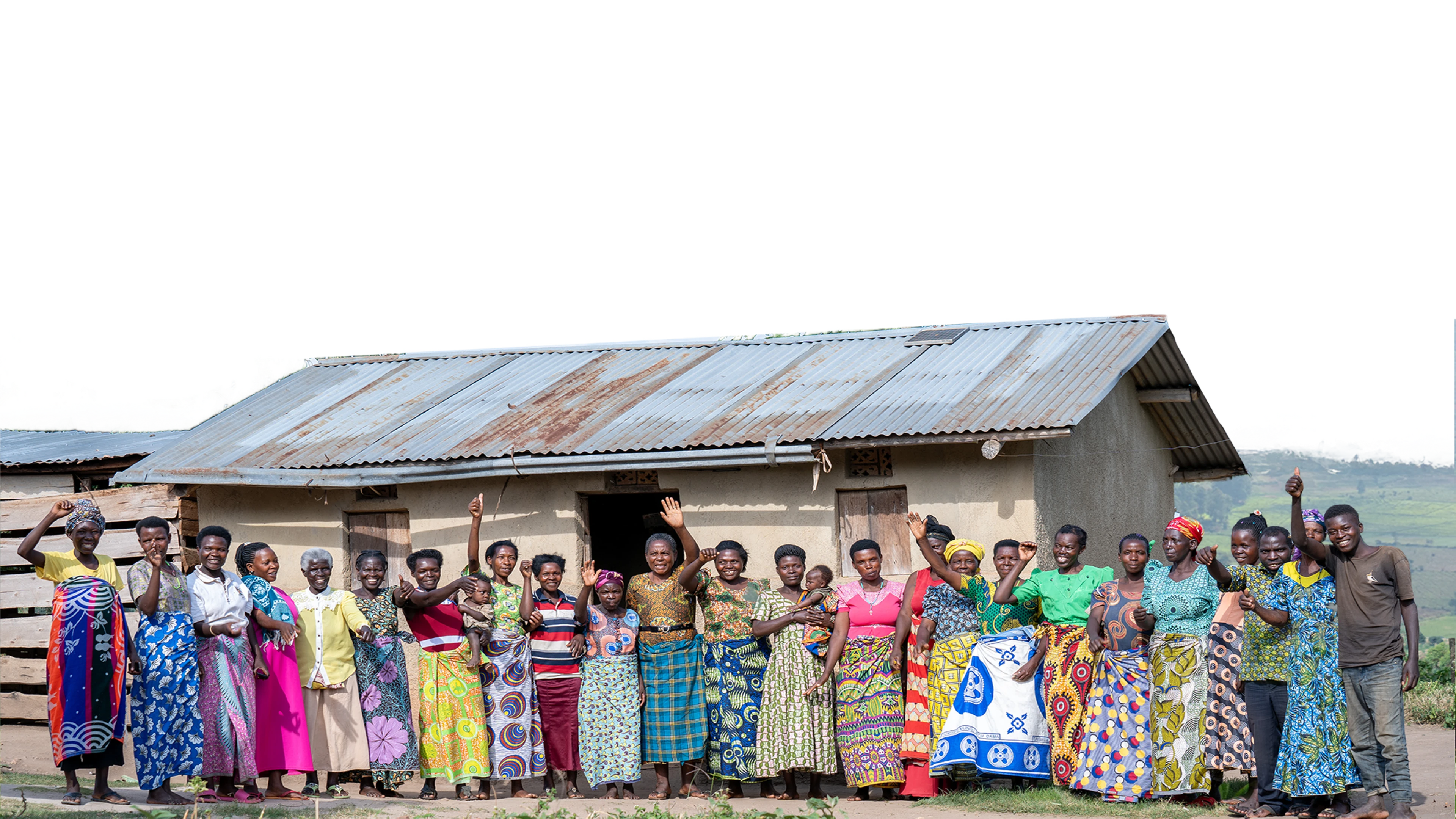
An independent randomized controlled trial (RCT) of Raising The Village’s 24-month graduation program in Uganda has found that it creates significant and sustained welfare gains at a fraction of the cost of comparable approaches.
The RCT found that our program households in the treatment group earned 26% more income, accumulated 31% more wealth, and consumed 10% more than comparable households in the control group. During the lean season, treatment households consumed 38.8% more than control households.
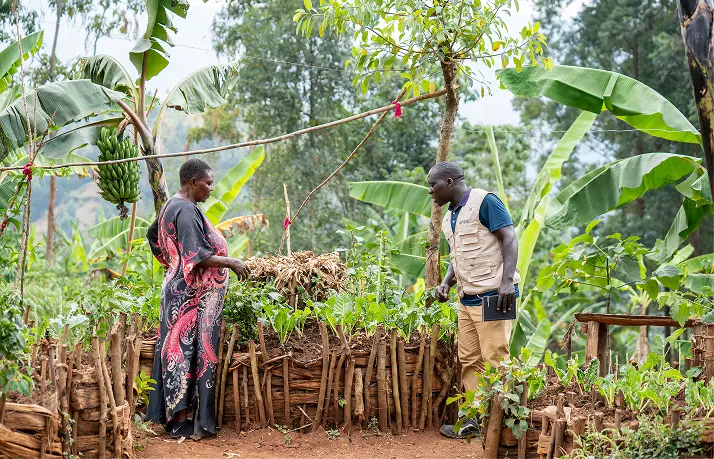
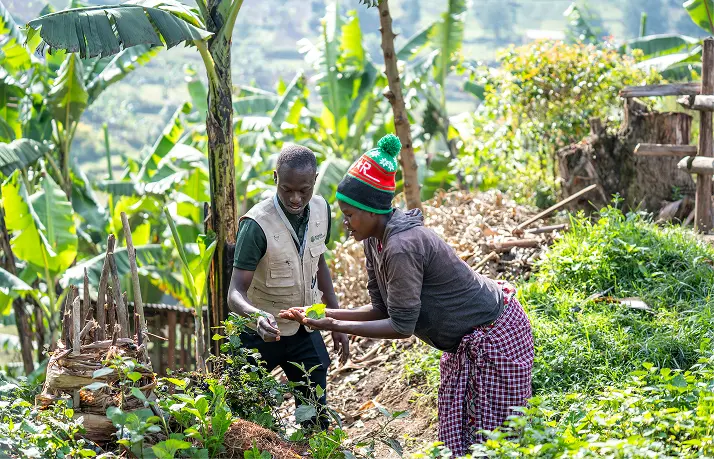
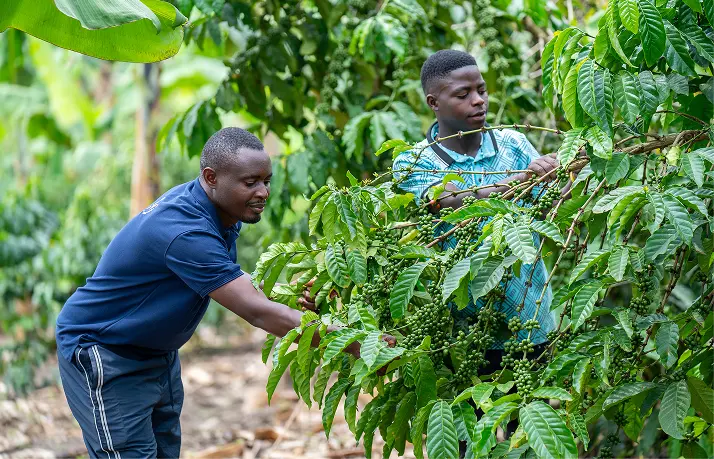
These differences isolate the program’s causal impact at the endline. The impact was driven by durable changes in household economic behavior, including diversification of crops, a shift away from casual labour, expansion to livestock and enterprises, household asset accumulation, and improved food security.
This study confirms that RTV’s program generates broad-based, lasting impact at significantly lower cost.
Why this study matters
Sub-Saharan Africa accounts for nearly half of the 1.1 billion people living in acute multidimensional poverty. The region is home to about 1.3 billion people today and is projected to reach roughly 2.5 billion by 2050, making it harder for communities to access food, livelihoods, and essential services.
Despite decades of development financing, progress in poverty reduction remains uneven. This randomized controlled trial provides independent evidence that a low-cost, universal 24-month graduation program can increase agricultural production, incomes, and wellbeing in last-mile rural communities, while suggesting a design capable of scaling in high-poverty contexts.
This RCT adds important new data points to the existing body of evidence about what works in poverty reduction. It provides rigorous third-party evidence that a low-cost, universal, 24-month graduation program can be effective at increasing agricultural production, incomes, and health and well-being in last-mile, rural communities. Critically, it also finds evidence that the program’s design lends itself well to scalability in different contexts with high ultra-poverty.
Study design
The RCT study was conducted by Mahreen Mahmud, Senior Lecturer at the Department of Economics at the University of Exeter and Emma Riley, Assistant Professor in the Department of Economics at the University of Michigan, in partnership with Innovations for Poverty Action (IPA). The key survey design elements were:
Because RTV’s program is universal, meaning that it is offered to all households in treatment villages, the study was able to examine not just the average impacts, but also distributional effects, for example how outcomes differed for poorer and wealthier households.
Key findings
Key findings from the randomized controlled trial show substantial improvements in household economic outcomes, resilience, and wellbeing. Households offered the program earned more, accumulated more assets, consumed more food, and experienced better health at a cost far lower than comparable approaches.
What sets Raising The Village’s program apart?
RTV’s program is delivered to every household in a village. This universal, community-based approach enables households to improve together, and the RCT found it raises incomes, agricultural production, and wellbeing without leaving the poorest behind.
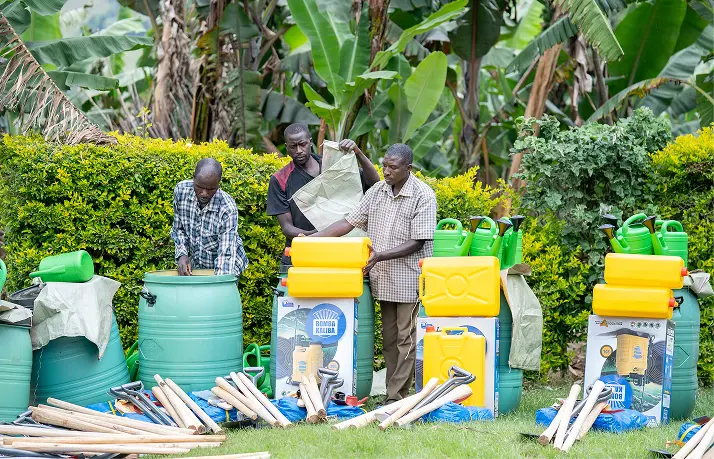
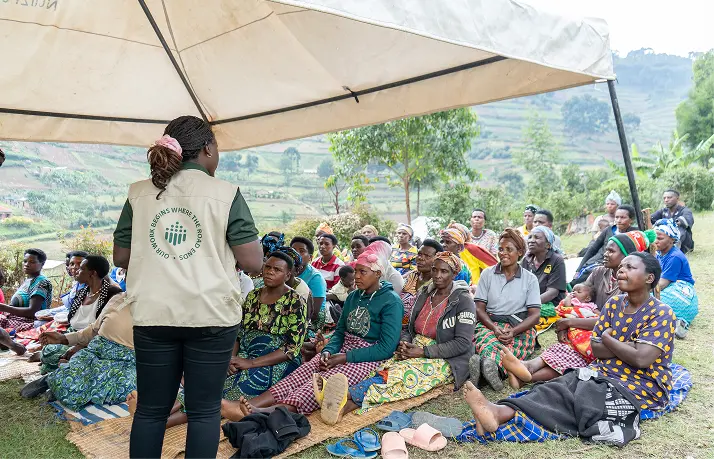
Instead of providing a large one-time asset such as livestock or cash transfers, RTV provides smaller initial inputs, including high-quality seeds, training, and access to Village Savings and Loan Associations. These village-level systems help households build assets and income over time.
Together, these design features enable community-wide progress while maintaining a cost structure that supports broader implementation.
Frequently asked questions
The RCT sought to answer two key questions: Whether a universal graduation program can be impactful and cost-effective, and whether delivering the same intervention to all households at the same time increases competition in village economic activities, limiting gains for the poorest households.
The RCT was interested in four primary outcomes: 1) Consumption (food, durable goods and non-food non-durable goods, and education); 2) Household labour supplied by all household members; 3) Wealth (assets, livestock, savings, and net lending); and 4) Income (crop sales, livestock and asset sales, non-farm enterprise profits, salaried and casual labour income, and rental income).
The RCT sought to answer the question of whether a universal anti-poverty program can improve outcomes for all households in a village. The RCT applied very conservative measurements, tested against a strict counterfactual, and provided causal credibility.
RTV’s ongoing program monitoring seeks to assess cohort performance, trajectory over time, and progress on our Theory of Change, as well as on income pathways and graduation results. RTV’s monitoring and evaluation tracks cohorts over multiple years, uses treatment and comparison sub-counties, aligns directly to our program design, and reflects real-world rollout conditions. It helps us to monitor ongoing program performance and optimize our program to create the highest impact.
The positive impact that the study authors observed on income, consumption, and asset accumulation in RTV’s program is comparable to the documented impact of traditional graduation programs. But RTV’s results were achieved at much lower cost.
The program's three-year benefit–cost ratio is 271 percent. This ratio is between four and eleven times larger than the benefit–cost ratios of comparison programs and large one-time cash transfers. Traditional graduation programs typically cost, on average, USD $3,612 per household (2014 USD Purchasing Power Parity (PPP)). In contrast, RTV costs approximately USD $288 per household for a comprehensive package of support.
The study focused on a strict three-year period and found a strong positive impact on household economic outcomes over that period. When researchers looked at data from a midline survey with a sub-group that was evaluated beyond the three-year mark due to a staggered program rollout, study authors also found evidence that treatment effects did not diminish after the end of the program, and are likely to persist over time.
Why are results measured using purchasing power parity (PPP)? PPP is used in academic research to standardize results across countries by adjusting for differences in price levels, so impacts and costs can be compared. The RCT uses PPP for comparability across global studies.
The cost-per-household in the RCT is a fully-loaded cost in 2023 USD PPP. The RCT looked at the full economic cost of delivery, including the value of time contributed by government extension workers and other local officers.
This is standard practice in the sector and aligns with how the cost of other graduation programs are calculated. It reflects total economic resource cost under a standardized research accounting for cross-program comparison.
Consumption during the lean season rose by 38.8 percent, highlighting households’ improved ability to smooth consumption throughout the year. Households were significantly less likely to reduce meal sizes or skip meals during periods of hardship, demonstrating a strengthened capacity to meet basic nutritional needs consistently.
Yes, they did. Providing integrated support to all households in a village led to gains in income, assets, consumption, and resilience among both poorer and relatively better-off households.
Were there any spillovers detected?
Positive spillovers were noted across treated clusters, but no spillovers were detected between the treatment and control clusters.
We use baseline surveys, annual household surveys, standard evaluations and comparisons with peer communities. A difference-in-differences approach isolates program impact over time.
The study’s findings on the returns generated by the program are a conservative estimate because the study accounted only for benefits realized within the first three years, assumed zero benefits in the first year, and excluded potential longer-term gains. Also, improvements in health, mental wellbeing, and social cohesion were observed but not monetized.
The Principal Investigators followed best practices for survey checks and programming and followed the World Bank Impact Evaluation Unit's practices. The survey instrument was coded with several checks to ensure high-quality data, for example to flag or not allow extreme values to be entered. In addition, audits were carried out to validate the data collected.
Have the results been published?
The authors are following the traditional publishing process and have submitted the paper to a leading economics journal for peer review and publication.