
A future built on new learnings
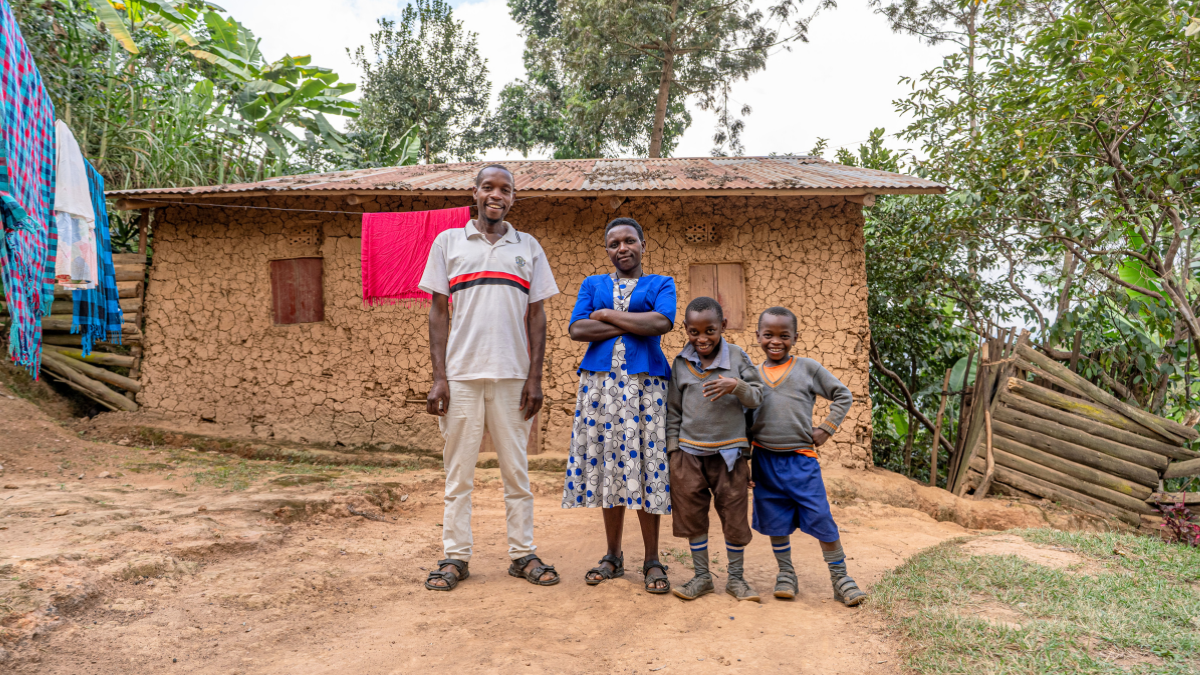
Alex spends much of his time tending Irish potatoes, one of his most important crops, and his harvests are much larger than before. He also keeps livestock closer to home now, in shelters that protect them from the cold conditions common in his village. "We were very poor and would spend days without having a single earning. That made me so worried about my young family," Alex recalls. Today, his family eats three meals a day, his children are in school, and he is saving and investing in new livelihood activities.
Earlier, farming was mainly about producing enough food for the household. Poor-quality seeds, limited knowledge of improved agricultural practices, and floods and soil erosion on the steep terrain contributed to low harvests. Alex had no savings group or access to affordable credit, making it difficult to invest in farming or manage periods of low income. He recalls one particularly difficult time when there was no food at home, and he had to borrow money at a high interest rate to meet his family's immediate needs. Poor household hygiene and costly access to health services added further pressure.
In early 2025, Alex's household and others in his village joined Raising The Village's program. Through agricultural, livestock management, financial literacy, and WASH training, combined with access to savings and regular coaching, Alex began changing how he farmed, managed livestock, and planned household finances. As production improved, he was able to provide more food for his family, begin saving, and invest in additional livelihood activities.
Moving from subsistence farming to higher production
Alex lives with his wife, Precious, and their two children in Rubanda District. His village lies in a cold, mountainous area near Bwindi Impenetrable National Park. Its steep, green landscape makes farming difficult: heavy rains can cause flooding, landslides, and soil erosion, and cultivating steep slopes requires extra labor. Alex has watched a small stream beside his garden expand over time. "The small river next to my garden started as a small stream of water, which kept on expanding and became a bigger river that sometimes floods," he says.
Irish potatoes have long been Alex's main crop and income source, but before the program, his production was low. He used poor-quality seed, had limited knowledge of planting seasons and post-harvest handling, and relied primarily on animal waste rather than prepared compost or liquid manure. He consumed much of what he grew at home, leaving little surplus to sell.
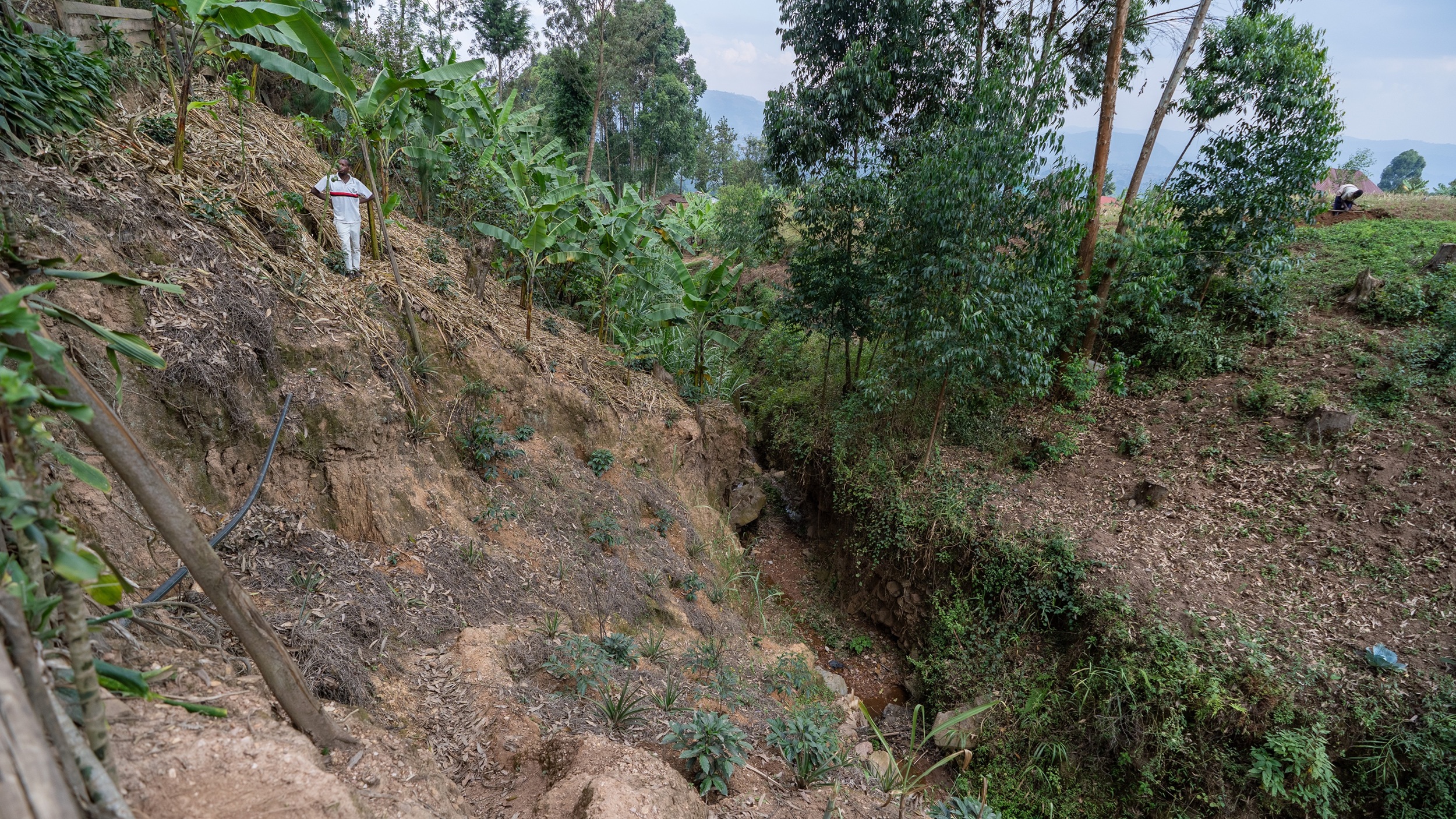
Through agricultural training, Alex learned improved planting methods, how to prepare compost and liquid manure, and how to establish keyhole and backyard vegetable gardens. He also received agricultural inputs and continued working with RTV staff as he applied what he had learned. He quickly adopted making and applying manure because the results became visible in his crops. Before the program, Alex says planting 80 kilograms of Irish potato seed produced around 100 kilograms. After applying improved agricultural practices, 40 kilograms of seed produced around 300 kilograms.
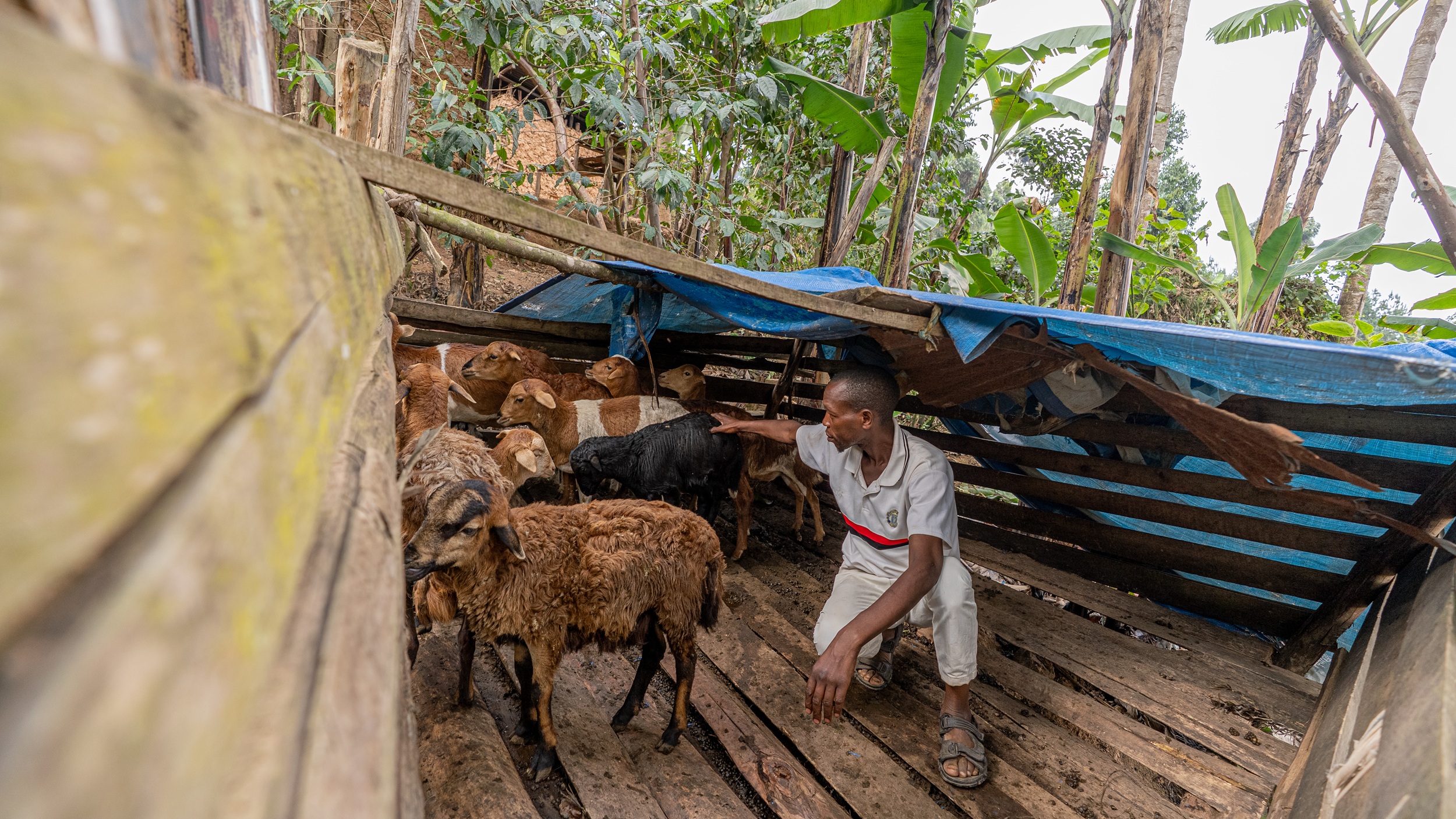
Not every change was easy. People had traditionally kept livestock in the hills, where their waste fertilized the land, but cold conditions contributed to animal losses. "The hardest change to adopt was getting our livestock from the hills and bushes to building shelters for them at home," Alex says. With coaching and continued practice, he began keeping his animals in improved shelters closer to the household.
Building savings, livestock, and new opportunities
As harvests improved, Alex joined a joint Village Savings and Loans Association (VSLA), where he saves regularly and can access credit for productive investments. Precious also participates in a VSLA and serves as a group treasurer. Alex has used savings and access to credit to expand into livestock trading. He buys sheep and pigs, raises them, and sells them when they have gained value. He now owns 12 sheep, adding another source of household income alongside farming. The family has established keyhole gardens that provide vegetables for their meals. Alex says the household now eats three meals a day and can afford necessities such as clothing, soap, and salt. "We can also now afford to buy meat once in a while since I now earn money from my surplus produce," he says.
Both Alex and Precious have also taken on leadership roles in their community. Alex now serves as a Village Champion, supporting other households as they apply practices introduced through the program, while Precious contributes to the leadership of her savings group.
Progress has not removed the environmental challenges around them. Flooding, steep terrain, soil erosion, and occasional crop damage remain part of farming in the area. But Alex's household now has more ways to respond with improved agricultural knowledge, savings, livestock, and several sources of food and income.

Looking ahead, Alex wants to make those gains permanent. "I want to raise enough money to build a permanent house for my family," he says. Precious shares a similarly long-term goal, ensuring their children continue their education through university.
Read more stories
A future built on new learnings
Clean water, stronger communities
Last-mile doesn’t mean last in line.
Join the mission
Last-mile doesn't mean last in line. Every community deserves dignity and agency.